
North America is short thousands of equipment technicians. In the United States alone, dealerships face an annual shortage of approximately 10,000 diesel technicians. How can dealers keep up when the talent pipeline can’t be rebuilt overnight? New 2026 workforce research from the Associated Equipment Distributors Foundation and the Canada Equipment Dealers Foundation makes the scale of the problem difficult to ignore. It also makes one thing clear: dealerships can’t recruit their way out of this challenge alone.
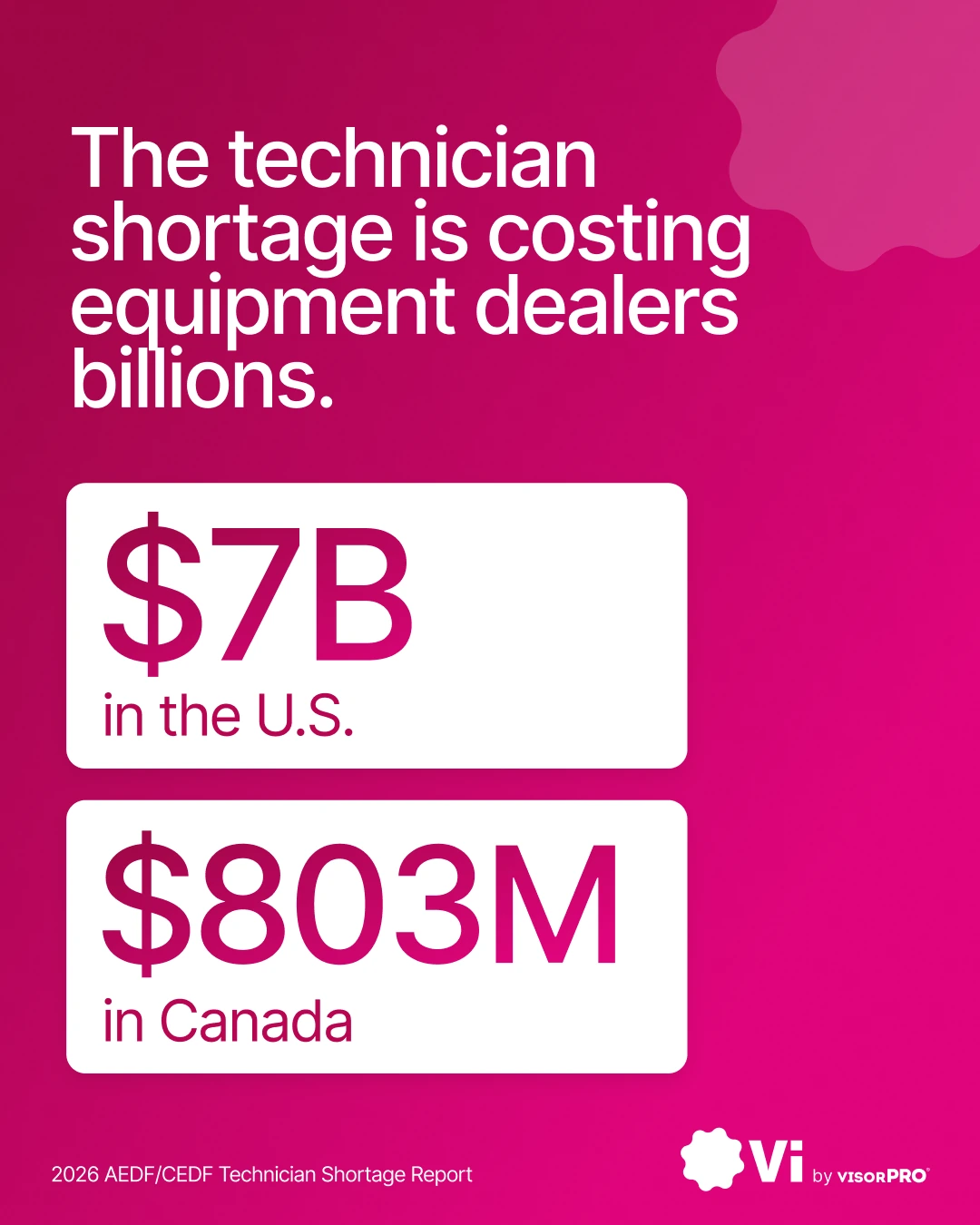
Across the United States, agriculture and construction equipment dealers face an annual shortage of approximately 10,000 diesel technicians, costing the industry an estimated US$7 billion in lost shop and parts revenue. Eighty percent of U.S. dealers say the shortage prevents them from meeting customer demand, 77 percent say it has hindered growth, and 72 percent report increased costs and operational inefficiencies.
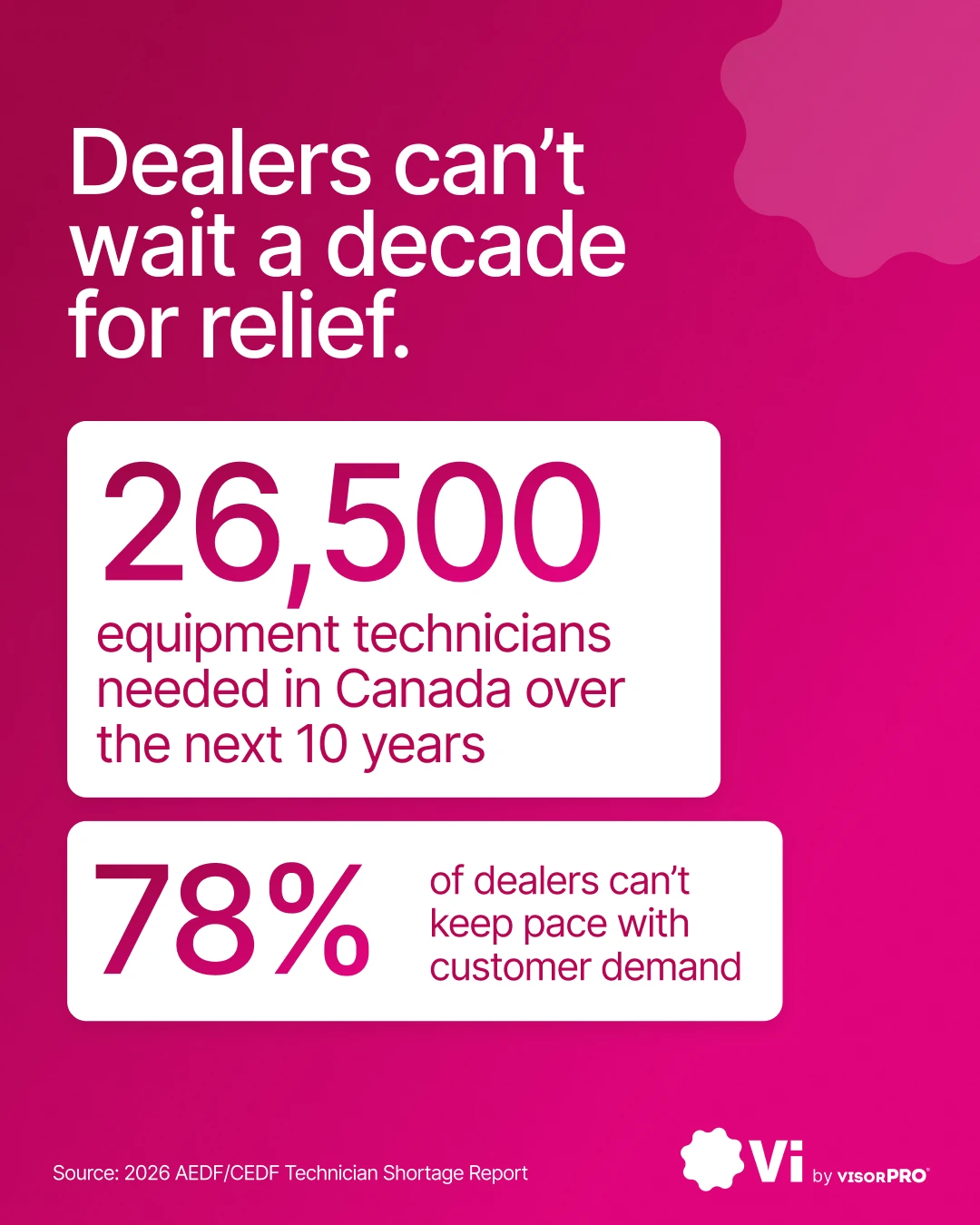
Canadian dealers face the same pressure. The research estimates an annual shortfall of 1,263 technicians and CA$803 million in lost shop and parts revenue. Seventy-eight percent of Canadian dealers can’t keep pace with customer demand, while 62 percent say the shortage has limited growth. On both sides of the border, open positions are now a direct constraint on dealership performance.
Rebuilding the technician pipeline will take years
Recruitment remains essential. Dealers, manufacturers, educators and associations need to promote the career more effectively, create more work-based learning opportunities and align training with the technology technicians now encounter. Three-quarters or more of surveyed dealers in both countries identified work-based learning and internships as a leading policy solution.
The AED Foundation and the Canada Equipment Dealers Foundation are helping lead that work by connecting dealers, manufacturers and schools, expanding awareness of equipment-industry careers and supporting practical training pathways. The latest research gives the industry a clearer roadmap, but rebuilding the pipeline will take sustained effort.
The immediate operational problem can’t wait. Many technician vacancies remain open for months. Turnover is especially damaging between years two and five, when technicians have completed substantial training and are becoming highly productive. When they leave, the dealership loses capacity and often loses practical knowledge that has never been captured anywhere else.
Your team has more capacity than you think
The shortage is typically measured in unfilled positions, but dealerships feel it in lost time. A technician searches several disconnected systems for a repair procedure. A senior employee steps away from a complex job to answer a question that has been solved before. A service manager reconstructs incomplete notes for a warranty claim. A service advisor prepares a quote for a repair completed at another location but can’t quickly find the labour time or parts used.
These moments rarely appear as vacancies on an organizational chart, but they consume the capacity of the people already on the payroll. When qualified technicians are scarce, removing that friction becomes a workforce strategy.
Start by identifying the repeatable tasks that pull skilled employees away from productive work. Look at diagnostic research, repair planning, parts identification, quoting, service-story documentation, warranty preparation and onboarding. Then establish a baseline. How long does each task take? How often does it occur? How much senior-employee time does it consume?
Dealership knowledge should not leave with an employee
Most equipment dealerships hold more useful information than they realize. It exists across OEM and shortline manuals, years of completed work orders, technical documents, service stories and the experience of employees across locations. The problem is that this knowledge is often difficult to find when someone needs it.
A proven diagnostic path, regional repair or accurate parts list should not remain with one person or one branch. Dealers need consistent habits for capturing that knowledge and practical ways for employees to search it. This allows less-experienced technicians to learn from work the organization has already completed while senior technicians answer fewer repetitive questions.
Better access to knowledge can also improve retention. Compensation matters, and more than 70 percent of surveyed dealers in both Canada and the United States plan to raise technician pay this year. But the employee experience matters too. Good tools, accessible training, less unnecessary administration and a visible path to becoming more capable all affect whether a technician sees a future with the dealership.
Turn time saved into measurable gains
Technology can help dealerships create capacity, but only when it’s tied to a real workflow and a measurable outcome. A useful pilot starts with one recurring problem and tracks the operational result for 60 to 90 days. Depending on the workflow, that could include research time, documentation time, billable hours, rework, parts accuracy or warranty cycle time.
The objective is not to remove technician judgment. It’s to make the dealership’s best information easier to use so employees can make informed decisions faster. If a tool does not save time, improve the quality of work or help the team serve more customers, it’s not solving the workforce problem.
Build tomorrow’s workforce while strengthening today’s
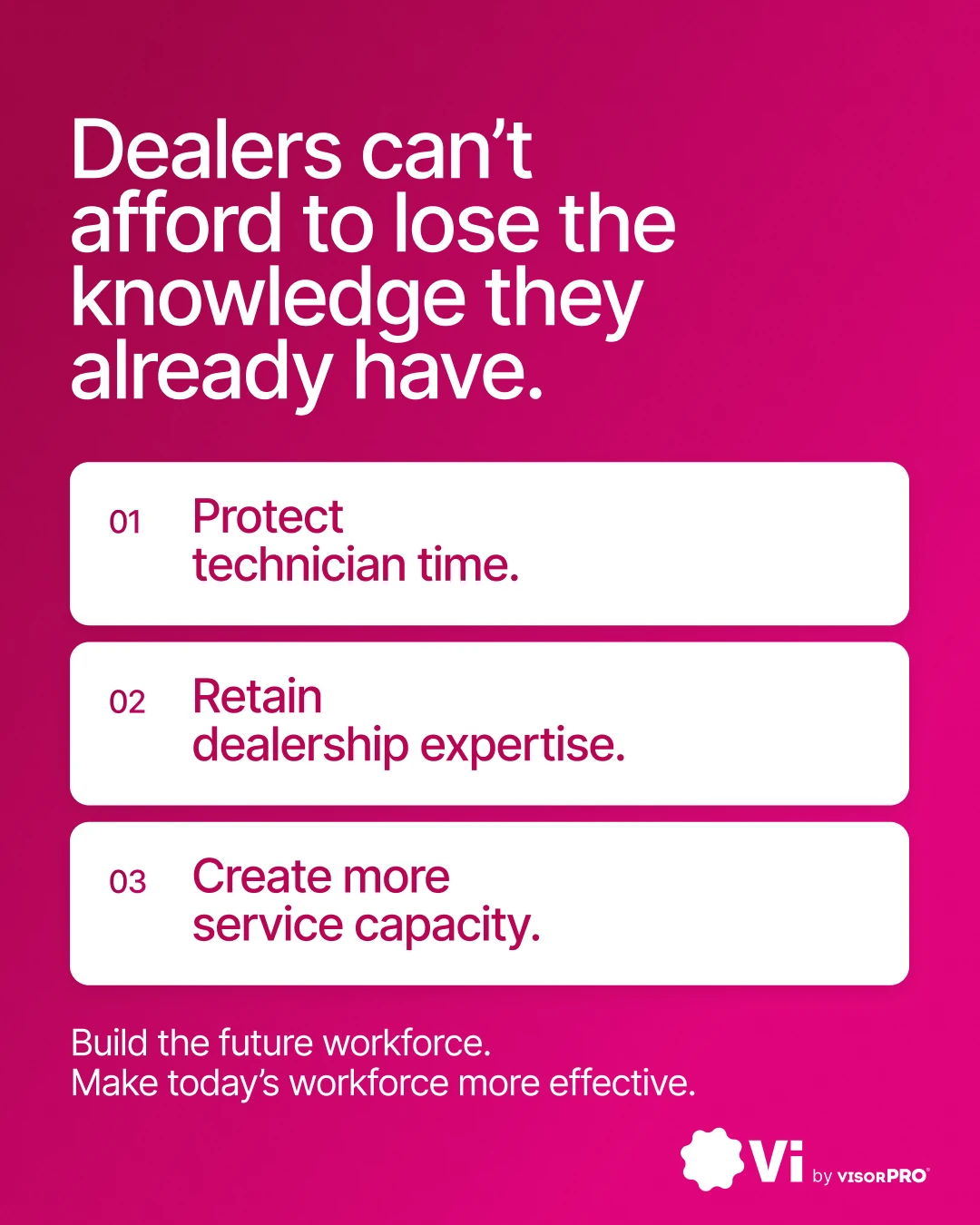
There is no single answer to the technician shortage. North America needs a stronger pipeline of people entering the trade, and the work led by AEDF, CEDF and their industry partners is essential. Dealers can contribute by building relationships with schools, offering meaningful work-based learning and showing students how advanced and varied equipment technology has become.
At the same time, every dealership can improve how effectively its current team works. Capture the knowledge already inside the business. Reduce the time employees spend looking for answers or repeating completed work. Give newer technicians better access to the experience around them. Measure whether those changes create real capacity.
The shortage may be counted in open positions, but its business impact is also measured in delayed repairs, lost billable hours and knowledge that is difficult to replace. Dealerships that address both the talent pipeline and the productivity of the current team will be better prepared to grow while the industry builds its next generation of technicians.
Unlock more capacity in your aftermarket team with Vi